

SME growth strategies in India focus on improving profitability, expanding market reach, strengthening operations, and building long-term resilience. For Indian SMEs, growth is driven by smart scaling, digital adoption, customer-centric SME marketing, and efficient financial and operational planning—rather than rapid expansion alone.
Understanding SME Growth in the Indian Context
Small and Medium Enterprises (SMEs) are the backbone of the Indian economy, contributing significantly to employment, GDP, and exports. However, growth in India comes with unique challenges such as price sensitivity, regulatory complexity, limited access to capital, and intense competition.
Effective SME growth strategies in India depend on:
- Industry and sector
- Stage of business maturity
- Geographic presence
- Internal capabilities and resources
Growth must balance scale, sustainability, and compliance.
Key Challenges Faced by Indian SMEs

Before scaling, SMEs must address common obstacles:
- Limited access to affordable finance
- High customer acquisition costs
- Operational inefficiencies
- Talent hiring and retention issues
- GST, tax, and regulatory compliance
- Low adoption of digital tools
Overcoming these challenges is essential for sustainable SME scaling in India.
Core SME Growth Strategies in India
1. Strengthen Business Fundamentals
Growth should begin with a solid foundation.
Key focus areas:
- Clear value proposition
- Defined target customers
- Predictable cash flow
- Documented operating processes
Practical insight:
SMEs with standardized workflows scale faster and face fewer execution risks.
2. SME Scaling in India Through Market Expansion
Market expansion is a proven growth lever.
Ways to expand:
- Entering new cities or states
- Targeting new customer segments
- Offering variations of existing products
India-specific insight:
Tier 2 and Tier 3 cities offer high growth potential with lower competition, especially for services, manufacturing, and B2B SMEs.
3. Digital Transformation for SME Growth
Digital adoption enables scale without proportional cost increases.
High-impact tools include:
- Accounting and GST software
- CRM systems
- Inventory and supply chain platforms
- E-commerce and payment solutions
Outcome:
Improved efficiency, real-time data, and better decision-making.
4. SME Marketing Strategies for Scalable Growth
SME marketing plays a central role in growth without overspending.
Effective SME marketing channels:
- Search engine optimization (SEO)
- Content marketing and blogs
- Google Business Profile and local SEO
- Email and WhatsApp marketing
- B2B marketplaces
Best practice:
Prioritize high-intent, organic channels before paid advertising.
Example:
A professional services SME generating inbound leads through SEO reduces customer acquisition costs over time.
5. Customer Retention as a Growth Multiplier
Retaining customers is more cost-effective than acquiring new ones.
Retention strategies:
- Loyalty and referral programs
- Consistent follow-ups
- Feedback-driven improvements
- Strong after-sales support
Key metric to track:
- Customer Lifetime Value (CLV)
6. Financing and Capital Planning for SMEs
Capital supports growth, but misaligned funding creates risk.
Common funding options:
- Bank loans and NBFCs
- Government-backed schemes
- Invoice and supply-chain financing
- SME-focused private equity
Tip:
Match funding type with business stage and cash flow cycles.
7. Process Optimization and Cost Efficiency
Scaling without efficiency increases costs and complexity.
Areas to optimize:
- Procurement
- Inventory management
- Logistics
- Vendor relationships
Lean processes help SMEs grow profitably, not just rapidly.
8. Talent and Leadership Development
People drive SME growth.
Key strategies:
- Hire adaptable, multi-skilled talent
- Invest in employee upskilling
- Define clear roles and accountability
Indian SMEs that invest in training experience higher retention and productivity.
9. Strategic Partnerships for Faster Scaling
Partnerships reduce risk and accelerate expansion.
Examples:
- Distribution partnerships
- Technology collaborations
- Co-branding and channel alliances
This is especially useful when entering new markets.
10. Compliance, Governance, and Risk Management
As SMEs grow, compliance becomes critical.
Key areas:
- GST and tax compliance
- Labor laws
- Data protection
- Industry regulations
Strong governance improves credibility with lenders, investors, and enterprise clients.
SME Growth Strategies by Business Stage
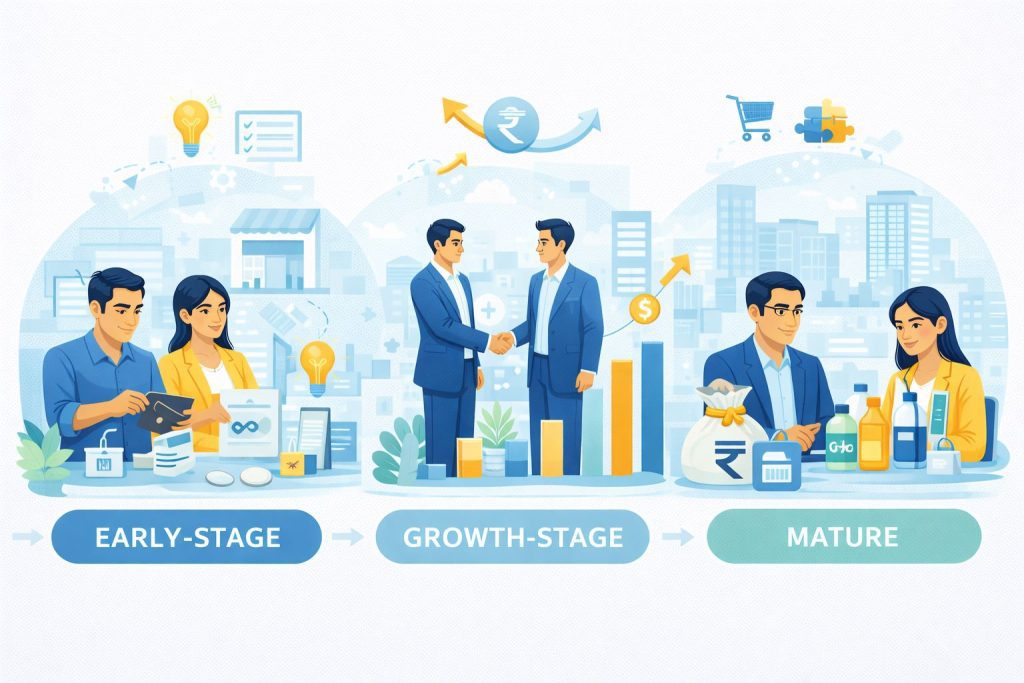
Early-Stage SMEs
- Focus on product-market fit
- Manage cash flow tightly
- Build brand visibility
Growth-Stage SMEs
- Expand markets
- Strengthen SME marketing
- Invest in systems and people
Mature SMEs
- Improve margins
- Diversify offerings
- Explore partnerships or acquisitions
Technology Trends Supporting SME Scaling in India
- Cloud-based ERP solutions
- AI-driven customer insights
- Fintech and digital payment tools
- E-commerce and D2C platforms
Technology lowers entry barriers and supports scalable growth.
Frequently Asked Questions (FAQ)
What are the most effective SME growth strategies in India?
Market expansion, digital adoption, strong SME marketing, and process optimization.
How can SMEs scale in India with limited capital?
By focusing on customer retention, lean operations, and organic digital marketing.
Is digital marketing essential for SME growth?
Yes. It provides scalable and cost-effective customer acquisition.
What role does compliance play in SME growth?
Compliance builds trust, reduces risk, and enables long-term scalability.
How long does it take for an SME to scale sustainably?
Typically 3–5 years, depending on industry, leadership, and execution.
Summary
SME growth strategies in India require a balanced approach combining SME scaling, digital tools, effective SME marketing, operational efficiency, and compliance. Sustainable growth is built through planning and disciplined execution.
Actionable Takeaways
- Strengthen fundamentals before scaling
- Use digital tools to improve efficiency
- Invest in SME marketing with measurable ROI
- Expand into Tier 2 and Tier 3 markets
- Focus on retention, compliance, and governance
Conclusion
Successful SMEs in India scale by building resilient systems, adopting technology thoughtfully, investing in people, and aligning growth with profitability. With the right SME growth strategies, Indian businesses can expand confidently while remaining sustainable and competitive over the long term.