Introduction
Business trends to watch in 2026 will be driven by AI-led productivity, profitability-focused growth, India’s digital public infrastructure, and a strong push toward sustainable, responsible business models. In simple terms, 2026 is about building smarter, leaner, and more resilient businesses—especially in the Indian market, where speed, scale, and efficiency must work together.
This article is written from a real editorial and strategic lens, keeping Indian entrepreneurs, business leaders, investors, and decision-makers in mind—not global buzzwords.
Why 2026 Will Be a Turning Point for Indian Businesses
By 2026, many trends discussed today as “future-ready” will become basic expectations.
Key forces shaping Indian businesses:
- Widespread AI adoption beyond metro cities
- Strong government-backed digital infrastructure (UPI, ONDC, DPI)
- Capital discipline after years of aggressive funding
- Customers demanding trust, transparency, and value
1. AI-First Operations, Not AI Experiments
In 2026, AI will no longer be optional or experimental.
What AI-first really means
- AI-driven demand forecasting, not manual spreadsheets
- Customer support powered by AI copilots, not scripted bots
- Automated insights for pricing, hiring, and inventory
Why this matters in India
- Affordable AI tools for MSMEs
- Large digital workforce
- High competition demanding efficiency
Example:
Retail brands using AI to predict festive demand and avoid excess inventory losses.
2. Profitability Becomes More Important Than Hypergrowth
One of the most critical business trends to watch in 2026 is the clear shift from aggressive expansion to sustainable profits.
Why this shift is happening
- Tighter funding and investor scrutiny
- Rising operational costs
- Pressure to show real business fundamentals
Strategic changes businesses must make
- Focus on unit economics
- Reduce dependence on discounts
- Build repeat customers, not just traffic
By 2026, founders and CEOs will talk more about margins than valuation.
3. India-Centric Digital Commerce and Platform Independence
India’s digital commerce ecosystem is evolving rapidly.
Key developments
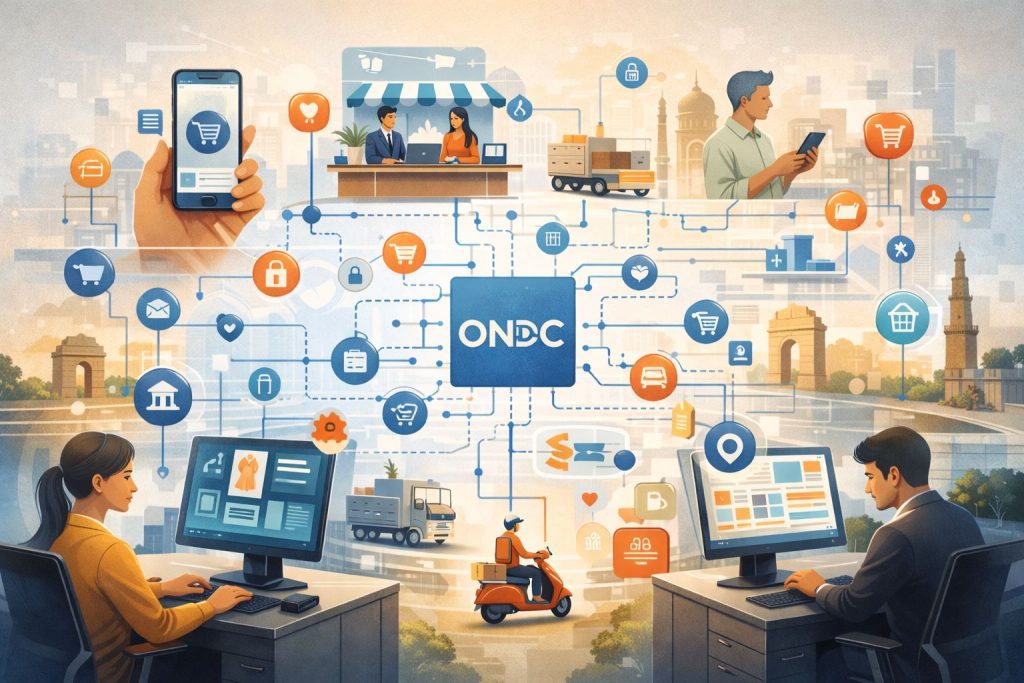
- Growth of ONDC-enabled commerce
- Brands investing in direct-to-consumer channels
- Reduced dependence on a few large marketplaces
Business impact
- Better margins for sellers
- Control over customer data
- Faster innovation in logistics and payments
Use case:
A regional brand expanding nationally using open digital commerce instead of high-commission platforms.
4. Sustainability Becomes a Business Requirement, Not a Trend
By 2026, sustainability will be closely tied to cost control and compliance.
What changes
- Customers expect ethical sourcing
- Regulators enforce environmental standards
- Investors assess long-term resilience
Practical sustainability actions
- Energy-efficient operations
- Transparent supply chains
- Responsible workforce practices
In India, sustainable businesses will often be more profitable, not less.
5. Hybrid Work Evolves Into Outcome-Based Work
The remote vs office debate will largely end by 2026.
The new reality
- Flexible work models
- Performance measured by results
- Digital collaboration as default
Business advantages
- Access to wider talent pools
- Lower infrastructure costs
- Higher retention and productivity
Leadership in 2026 will be judged by outcomes, not attendance.
6. Cybersecurity Moves Into the Boardroom
As businesses digitize, cybersecurity becomes a leadership responsibility.
Key risks in 2026
- AI-powered cyber threats
- Data privacy regulations
- Vendor and supply-chain risks
What smart businesses will do
- Build security into systems from day one
- Train employees regularly
- Treat cybersecurity as risk management, not IT expense

7. Industry-Specific AI and Vertical SaaS Growth
Generic software will slowly lose relevance.
What grows instead
- AI for manufacturing quality control
- SaaS tailored for healthcare, fintech, logistics
- Tools built specifically for MSMEs
India’s diverse industries demand specialized solutions—and 2026 will accelerate this shift.
8. Customer Experience Becomes the Main Competitive Advantage
By 2026, pricing and features alone won’t differentiate brands.
What defines strong CX
- Fast and reliable support
- Personalized communication
- Clear and honest policies
Businesses investing in customer experience will reduce marketing spend and increase loyalty.
9. Data-Driven Leadership Becomes the Norm
Gut instinct will no longer be enough.
Leadership changes
- Decisions backed by dashboards and insights
- Regular performance reviews using real data
- Cross-functional accountability
This is especially relevant for Indian family-run businesses transitioning to professional management.
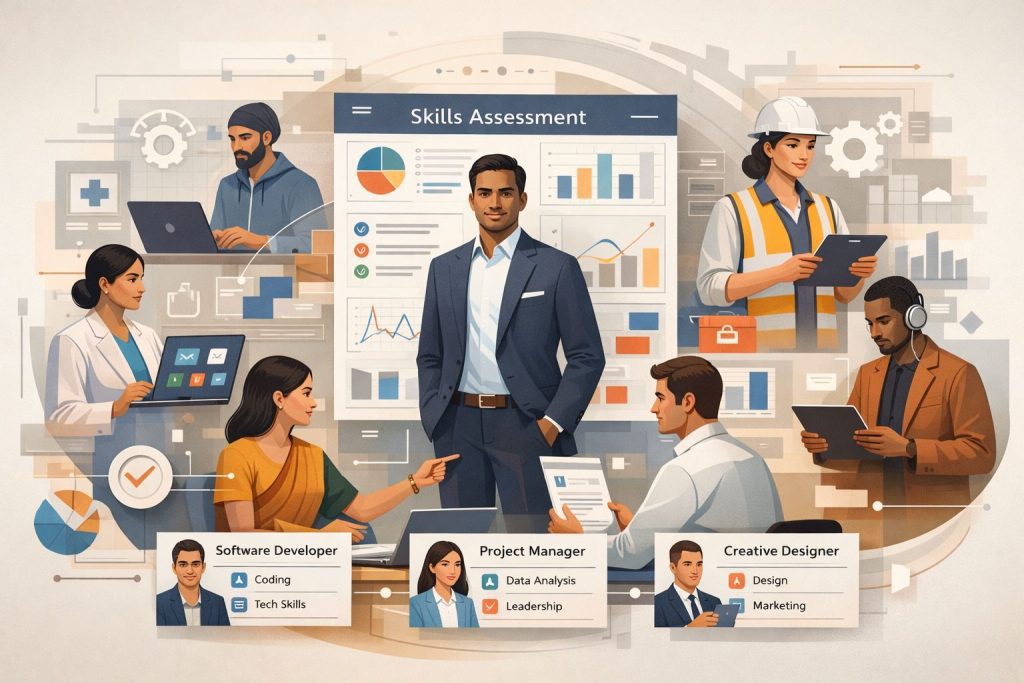
10. Skill-Based Hiring Replaces Degree-Based Hiring
By 2026, skills will matter more than formal qualifications.
Why this matters
- Faster hiring
- Better role fit
- More inclusive talent pools
Companies adopting skill-based hiring early will build more adaptable teams.
Key Takeaways: Business Trends to Watch in 2026
- AI becomes operational, not experimental
- Profitability overtakes growth-at-all-costs
- India’s digital infrastructure reshapes commerce
- Sustainability drives efficiency and trust
- Leadership becomes data-driven and accountable
Frequently Asked Questions (FAQ)
What are the most important business trends to watch in 2026?
AI-led operations, sustainable profitability, digital commerce platforms, cybersecurity, and customer-centric strategies will define business success in 2026.
How will AI impact Indian businesses by 2026?
AI will automate workflows, improve forecasting, enhance customer experience, and support smarter decision-making across industries.
Will startups still focus on rapid growth in 2026?
Most startups will prioritize revenue clarity, margins, and long-term viability over aggressive expansion.
How should businesses prepare for 2026?
Invest in AI readiness, strengthen cybersecurity, improve unit economics, and build customer-first strategies.
Are these trends relevant for small businesses?
Yes. Many trends—especially AI tools, digital commerce, and skill-based hiring—are highly beneficial for MSMEs.
Final Summary and Next Steps
The business trends to watch in 2026 point toward smarter growth, disciplined leadership, and responsible innovation—especially in India’s competitive market.
What you should do now
- Audit your business for AI readiness
- Re-evaluate growth and profitability metrics
- Strengthen digital and data security
- Invest in people, skills, and customer trust
The businesses that adapt early will not just survive 2026—they will define it.